A workflow system, not an always-on chatbot
ThinkShip started from the observation that most agent systems run every task — even pure monitoring and checking routines — through a language model. That's expensive and unnecessary: most recurring work doesn't need language understanding, just a reliable trigger.
The core idea: a topic or task is first treated as a workflow — cron job, trigger, data match. Only the part that genuinely needs language, judgment, or a decision gets handed to AI, if needed to a whole team of specialized agents with a real reporting line. That keeps ongoing AI cost where it actually adds value, instead of spreading it across every idle loop.
It runs most of the time passively in the background rather than as a request-response chatbot, and treats several cloud and locally run models as equals, chosen by task, cost, and confidentiality.
Design principles
Workflow before AI
A cron job or trigger costs nothing. An agent costs tokens. So the default question is always: does a workflow do the job, or is a language model genuinely needed?
Reversibility before autonomy
The more autonomous an action, the more guardrails apply: budget, approval gates, audit log.
Organization grows from need
No fixed org chart at the start — new roles only appear once a real gap becomes visible.
Everything observable and boundable
Every action, every token, every euro of cost is traceable and can be capped at every level.
Not a concept mockup — a real click-dummy
The screenshots below aren't a photo mockup — they're straight from the current click-dummy, the same codebase we still use to gather feedback from prospects today.
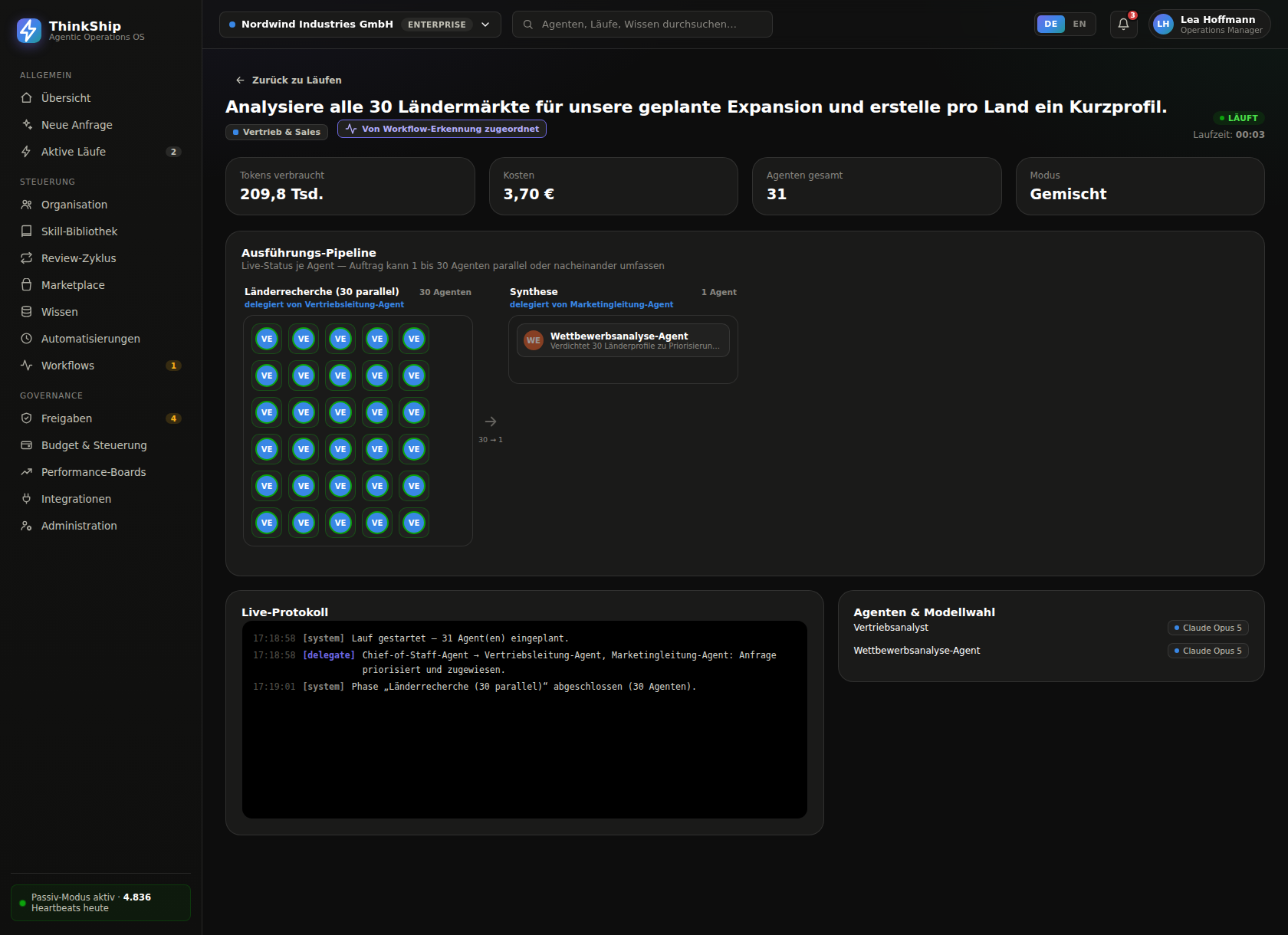
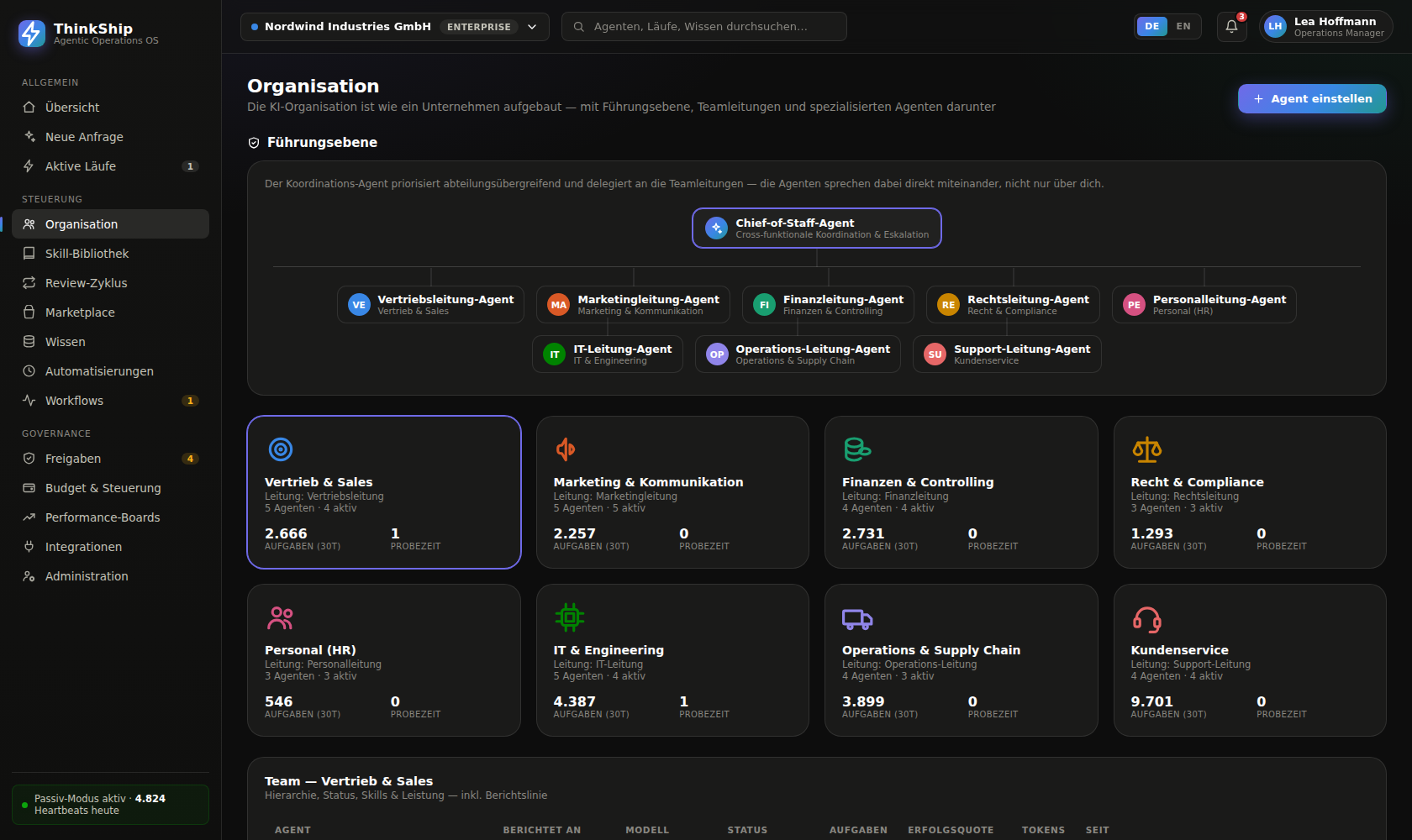
No customers yet? You read that right.
We'd rather say this once too often than not at all: ThinkShip doesn't have any paying customers yet. What it does have is a working click-dummy, a clear architecture — and an active search for organizations who want to help build it with us.
Design partners, not reference customers
We're currently looking for pilot customers who want to help shape the product early, rather than finding a finished reference list. Your feedback goes straight into the roadmap.
Certifications: on demand, after go-live
ISO 27001 and similar certifications aren't a marketing claim before the first customer. We'll pursue them once a design partner actually needs one — honestly later rather than early and empty.
DPA template as a starting point
So data protection isn't only raised once a contract draft lands, there's already a DPA template under Art. 28 GDPR to look at.
Your data. Your sovereignty.
At ThinkShip, self-hosting doesn't just mean “runs on your server” — it also means no shared cloud account, no access by us to your content, and no data going to a third party unless you chose that model provider yourself. Data sovereignty stays with you, backed contractually by the DPA template above.
See example pricing
The pricing page works through the split between system license and AI cost concretely — including the question of what you're actually paying ongoing AI cost for.